

In short: Building merchant estimating NZ depends on the model having learned on New Zealand plans. Local conventions mean local accuracy, and that is what protects the estimate you hand your customer.
If you run estimating for a building merchant, you already know the stakes. Every estimate you send is a promise. Building merchant estimating NZ lives or dies on whether the numbers match what gets built, and a model that has not learned on NZ drawings has nothing to go on when Kiwi conventions differ. Local plans need local accuracy.
Why NZ plans are their own thing
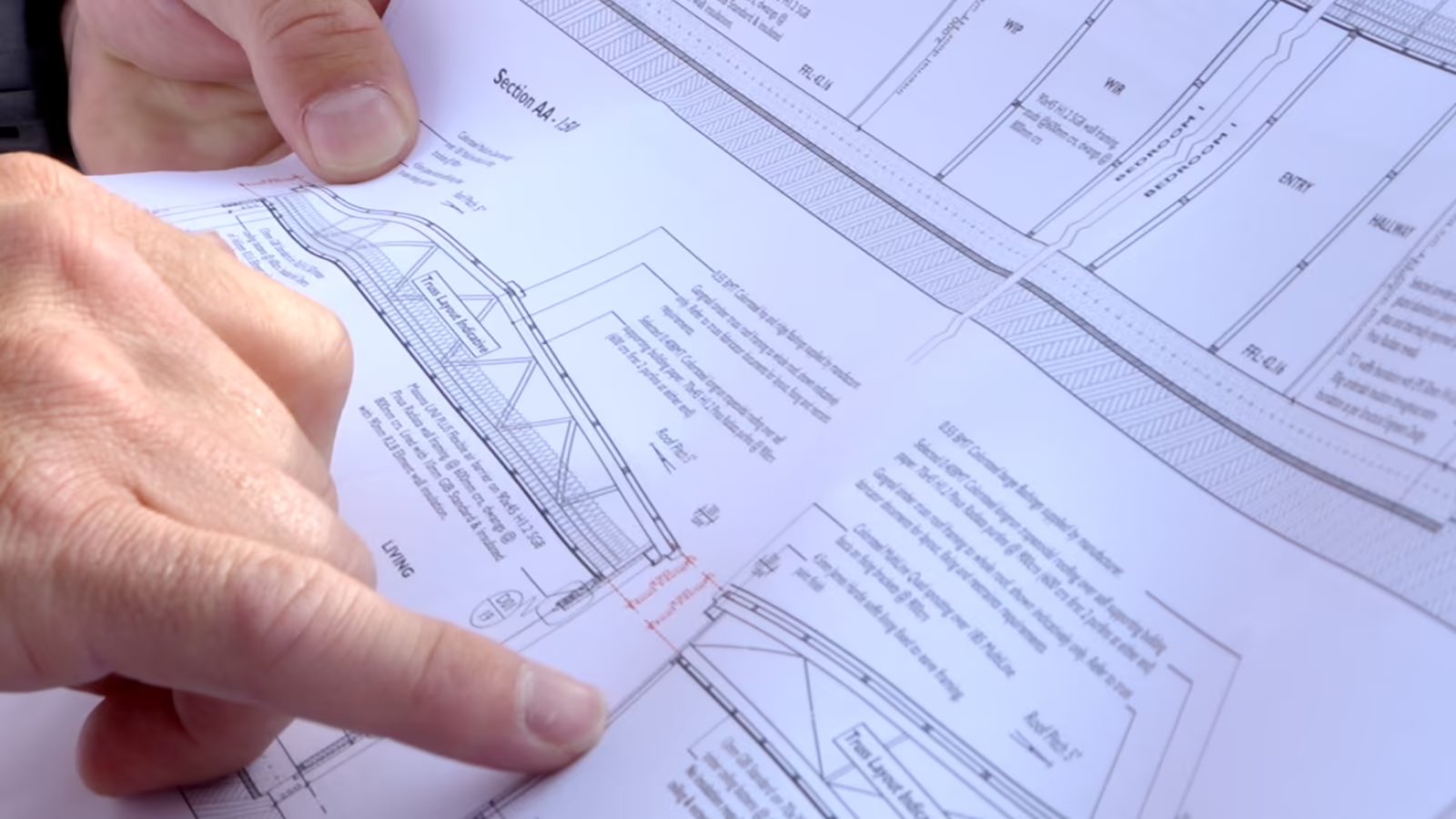
A New Zealand residential plan is not a generic drawing. We have our own framing conventions, our own bracing notation, our own way of calling up cladding, and timber sizing that follows NZS standards. A model that has only ever seen American or European plans has not learned any of that. It guesses, and a guess on a takeoff becomes a wrong line on a customer estimate.
TakeoffQS is trained on New Zealand residential plans. Our computer vision model has read the way NZ architects and draughtspeople actually annotate, so it picks up detail that only makes sense in a NZ drafting context. That is the difference between merchant takeoffs you can stand behind and ones you have to re-check by hand.
What local accuracy means for the merchant
Merchants sit in a tricky spot. You are not the builder, but you are the one whose estimate the builder uses to make a call. If your supplier estimating is off, you either lose the job on a number that was too high, or you wear the gap on a number that was too low. Neither is a good day.
Local accuracy gives you:
- Material lists that match NZ product ranges and pack sizes
- Cladding and lining takeoffs that read local call-ups correctly
- Framing quantities aligned to the timber sizing your customers actually order
- Fewer manual corrections before the estimate goes out the door
When the takeoff starts right, the estimate starts right.
White-label estimates that carry your name
Plenty of merchants want to put estimates in front of customers under their own brand. That is exactly the point of white-label estimates: the speed and accuracy of AI-powered takeoffs, wearing your logo, not ours. But a white-label estimate only helps you if the number underneath is sound. Slap your brand on a sloppy takeoff and you own the mistake.
This is why NZ plans accuracy matters more for merchants than almost anyone. You are lending your reputation to every estimate. The model has to be right on local drawings before you would ever hand the output to a builder.
How TakeoffQS keeps it local
Here is the practical side. You upload a plan, TakeoffQS reads it with our computer vision model, and a draft takeoff comes back in minutes instead of hours. Then a human on your team approves it. Speed from the machine, sign-off from a person who knows your customers and your stock.
The workflow looks like this:
- Upload the customer’s plan set.
- TakeoffQS produces a draft takeoff and estimate.
- Your estimator reviews and adjusts to your pricing.
- The white-label estimate goes to the customer under your brand.
Every step keeps a human in control of the final number. The model does the grunt work of measuring, which is the slow part, and your people do the judgement, which is the part that needs a human.
Why local training matters
A demo is not a plan set. Build costs here have been climbing, margins are tight, and customers notice when an estimate is off. What you need to know before you commit is whether the model has learned on the drawings your customers actually send you — because a Christchurch plan is not a Texas one, and a model can only read what it was trained to read.
Local training is not a marketing line for us. It is the reason the output is usable straight away. We are based in Christchurch, part of the BuildFoundry platform, and TakeoffQS is trained on New Zealand residential plans and gets better with every plan our customers run through it. If you want the detail on how that accuracy is measured, our note on the real metrics for AI takeoffs walks through it.
Key takeaways
- Building merchant estimating NZ needs a model trained on NZ plans.
- Local accuracy means material lists, framing and cladding match what your customers actually order.
- White-label estimates only help if the takeoff underneath is sound.
- Speed comes from the model, the final number stays under human control.
- Tight margins and rising costs make accuracy worth more, not less.
FAQ
Why can’t I just use any AI takeoff tool? Not all AI is the same, and the difference matters here. Most people picture a chatbot, a large language model, and that is the wrong tool for a takeoff. An LLM will give you an answer whether or not it is right, and it will sound completely sure of itself while doing it. On a set of building plans, that confident guessing is exactly what you do not want near a number with your brand on it. TakeoffQS is an entirely different beast. It is a purpose-built computer vision model, trained on NZ plans, that measures what is actually on the page rather than predicting what sounds likely. That is why it reads framing notation, bracing, cladding call-ups and timber sizing the way we build here, instead of producing takeoffs you have to fix by hand.
What does white-label actually mean for my merchant business? It means the estimate goes to your customer under your brand, not ours. You get the speed of AI-powered takeoffs with your name on the output, which keeps the customer relationship yours.
How long does an estimate take? TakeoffQS reads a plan and returns a draft takeoff in minutes rather than hours. Your estimator then reviews and adjusts it before it goes out, so the time saved is on measuring, not judgement.
Does a human still check the numbers? Yes, always. The model measures, your team approves. You get the speed without blindly trusting a machine on a number that has your brand attached to it.
Want to see how local accuracy looks on your own plans? Send us a plan set, or book a demo, and we will show you what merchant takeoffs look like when the model already knows New Zealand drawings.