

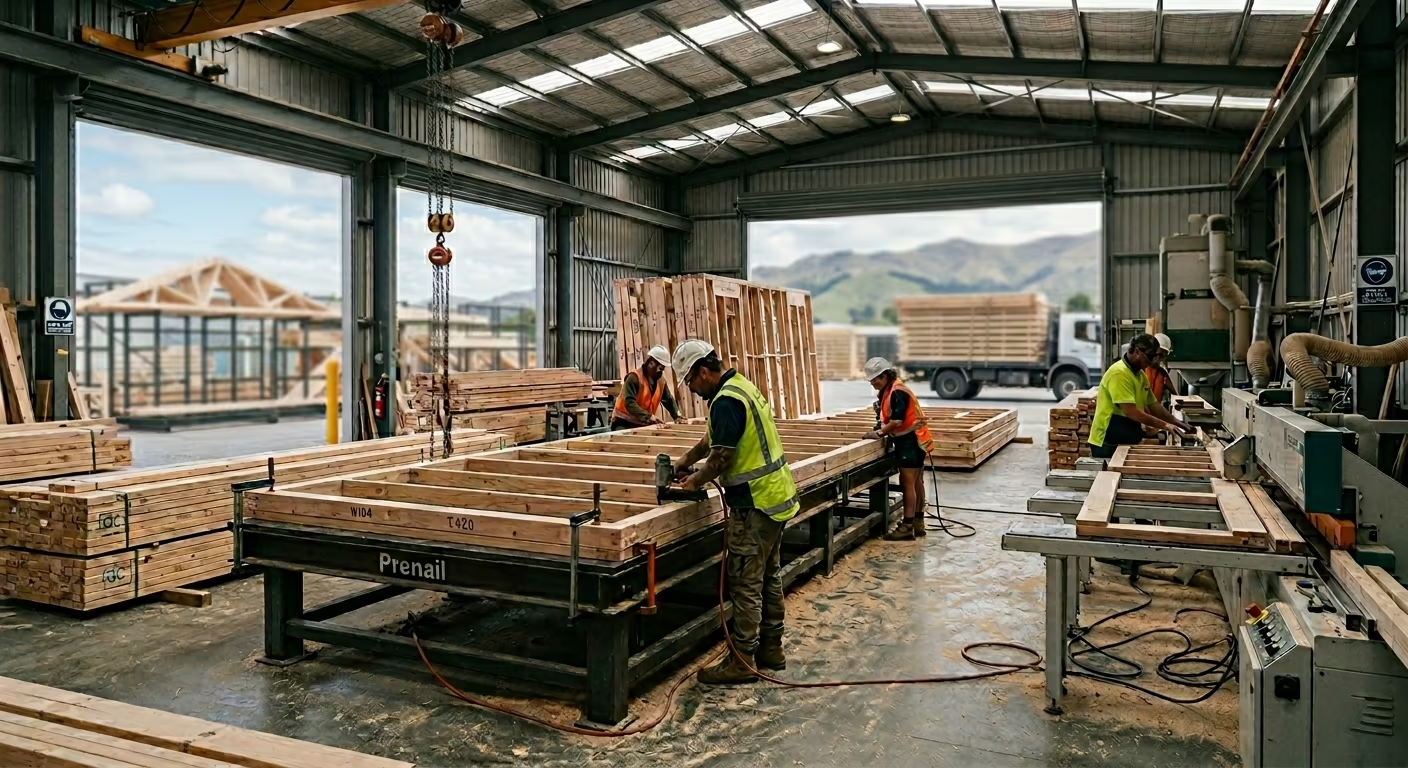
If you’re running an NZ frame and truss plant right now, you already know the squeeze. Residential is recovering unevenly. Builders are quoting more carefully and committing later. Pipelines are noisier than they were two years ago.
The plants winning work in 2026 are the ones whose quotes land first, accurate, and signed off by someone the builder trusts. That last part is where most plants are leaking jobs they should have won.
Where the time actually goes
Walk into any prenail estimating office and watch a senior QS work a plan set. Hours go to tracing. Counting studs. Reading elevations. Measuring rakes. Typing numbers into a takeoff package or someone’s in-house spreadsheet so the pricing engine has something to chew on.
That work is data entry, and it creates the all-too-familiar backlog of jobs sitting on the desk.
Those 4 to 6 hours of measurement and data entry decide whether the real conversations with your client, the ones where you shape and refine the price to actually win the job, happen that day or a week later. In 2026, a week down the track is too late.
The job goes to the first credible quote
Builders go with whoever quotes first with confidence and stands behind the number. Plant loyalty barely registers anymore. Trust and credibility have to stay front of mind for leadership, and that’s hard to build when you can’t even guarantee when you’ll get to a job.
We’ve heard about this playing out on real jobs. Plan set goes out to three plants Monday morning. One plant turns a quote around Tuesday afternoon. The other two are still tracing on Thursday. By the time their quotes land, the builder is already in conversation with the first plant about variations, lead times, and where the price needs to sit to fit the client’s budget and get the job over the line.
Relationships in this industry are built on trust. If your client can trust you to deliver a quote quickly, your credibility builds and price has very little to do with it.
That’s the part most plants underestimate. The quote that goes out first wins the job, and it usually wins the next three jobs from that builder too, because the builder now knows exactly where to send the next plan set.
So what changes in 2026
Two things, and they have to happen together.
First, the tracing work has to compress. A multi-page plan set should become a draft takeoff in minutes. Framing, foundations, roofing metrics, cladding surface areas, the parts that are pure measurement get done by a computer that doesn’t get tired at 4pm on a Thursday.
Second, the estimator has to stay in charge of the workflow. Every measurement gets a verify-and-confirm step. The estimator’s name is on the export. The audit trail sits behind every number. When the builder asks “where did that come from,” the QS can show them, line by line.
That’s the shift worth getting right. The estimator stops being the operator typing numbers into a spreadsheet and starts being the auditor signing off on a draft the machine produced. Same person. Same seat. Better use of the experience they were hired for.
What it does for a prenail plant
The math gets interesting fast.
If your senior QS spends 2 to 3 hours per plan taking measurements, and that work compresses to 30 minutes of verification, you’ve got 1.5 to 2 hours back per plan. That’s another quote out the door the same day. Across a year, it’s the difference between turning work away and bidding for more of it.
The prenail plants we’re working with use this to stop losing jobs to slow turnaround and to take on the volume they already have to turn down. The senior QS keeps doing what they were hired for. Judgment. Builder relationships. The build-it-before-it’s-built thinking that a computer can’t fake.
That’s the part we care about most. A plant where the estimators feel elevated by the tool adopts it. A plant where they feel threatened by it doesn’t, regardless of what the GM signs. We’ve designed the workflow around that, on purpose.
A quick note on what this isn’t
It isn’t engineering. It isn’t compliance sign-off. It isn’t a bracing or structural adequacy calculation. It isn’t a black box that pushes a number out the other end with no one to ask.
It’s a workflow tool. The trace work compresses. The judgment work stays exactly where it belongs.
Where this is going
The next 18 months in NZ prenail will separate the plants that quote in hours from the plants that quote in days. We’re building TakeoffQS on real NZ residential plan sets, working alongside prenail plants that look a lot like yours.
Most plants will get there eventually. The real question is whether you’ll be the first plant in your region to do it, or the third.
If you want to see what plan-to-quote in minutes looks like on real NZ residential plan sets, including the verification step the estimator owns end to end, book us in for a demo.